|
1
|
|
|
2
|
- ASSUME you used to Party more when you were younger
(does not apply to those who are still young!).
- ASSUME that now, even if you really try, you cannot party as hard as you
used to without experiencing adverse symptoms.
- So what aspects of hard partying can old people no longer tolerate?
- staying up late…
- listening to loud music…
- dancing and/or just hanging out for hours with boisterous crowds …
- ingesting large quantities of alcohol and/or other drugs…
- smoking or at least being around people who are smoking…
- all of the above, especially in combination…
- Any exceptions in this room? Do
you know any adult exceptions?
( There are exceptions– but why them and not us? )
|
|
3
|
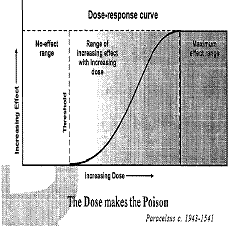
- In any animal or human, exposure to
any substance at some sufficiently
high dose will produce symptoms,
and moreso with increasing dose,
but not below this dose.
- This is the fundamental assumption
underlying all regulation (and litigation) of toxic exposures in
the
workplace and the environment.
|
|
4
|
- Well Recognized Non-Controversial Exceptions:
- At the high end of exposure, clear that for some toxins,
increasing dose beyond some level does not increase symptoms,
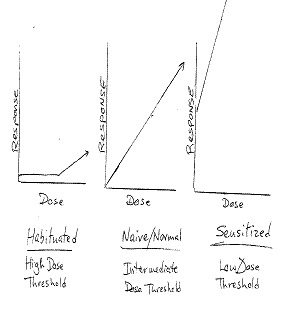
aka the threshold effect or habituation
- At the low end, clear that those with allergies experience symptoms at
much lower doses (even trace exposures)
compared to those without allergies, aka the atopic response
- Controversial exceptions:
- Clear but not well understood why some dose response curves are NOT
LINEAR, but U-shaped, aka the hormetic response
- Also not well understood why some individuals develop
non-allergic sensitization to very low levels of chemical(s) and
other stressors that were previously well tolerated,
aka the “I can’t party like I used to” effect, or MUSES Syndrome
|
|
5
|
- Low-level sensitization following high-level habituation contributes to
the difficulty of breaking drug, alcohol and tobacco addiction.
- “Healthy” workers who develop a tolerance for occupational chemical
exposures may become permanently sensitized to them following long
absences (from injury, illness, vacation or layoff).
- Children and adults who experience chronic or repeated high level
exposures to toxins in their homes such as mold or pesticides may later
become hypersensitized to low--and previously tolerated--levels other
petrochemicals
- People who try to resume taking a medication that they took—and then
stopped taking--long ago may experience new and/or more severe side
effects.
- Temporary sensitization to low-levels of chemical exposures such as
fragrances is a common feature of many transient conditions,
such as migraines, asthma attacks and PMS.
|
|
6
|
- Humans can develop asymptomatic habituation or tolerance
to high levels of all kinds of stressors;
- But if they lose their habituation via withdrawal, they may then also
become hypersensitive to very low levels of the same stressors
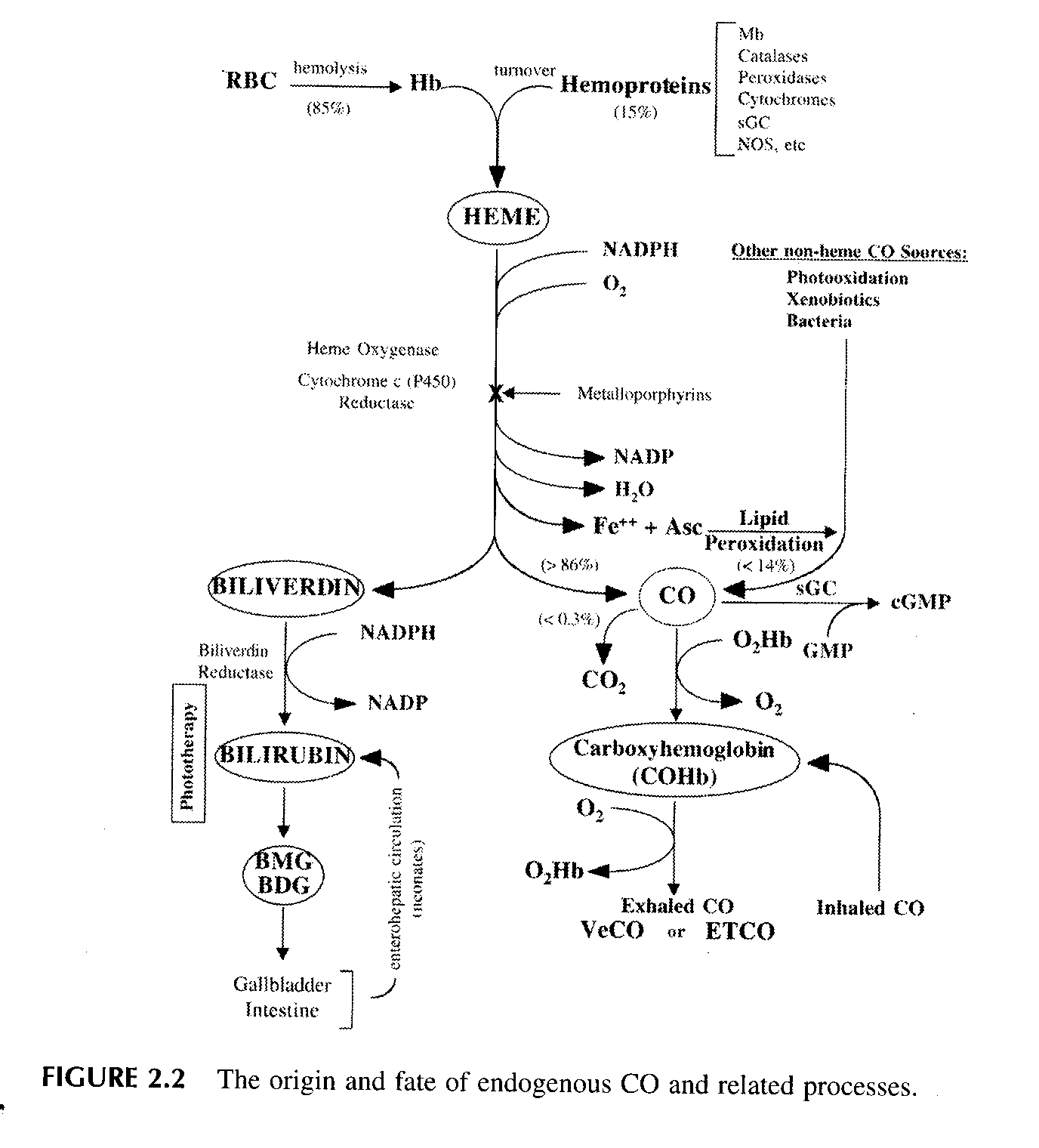
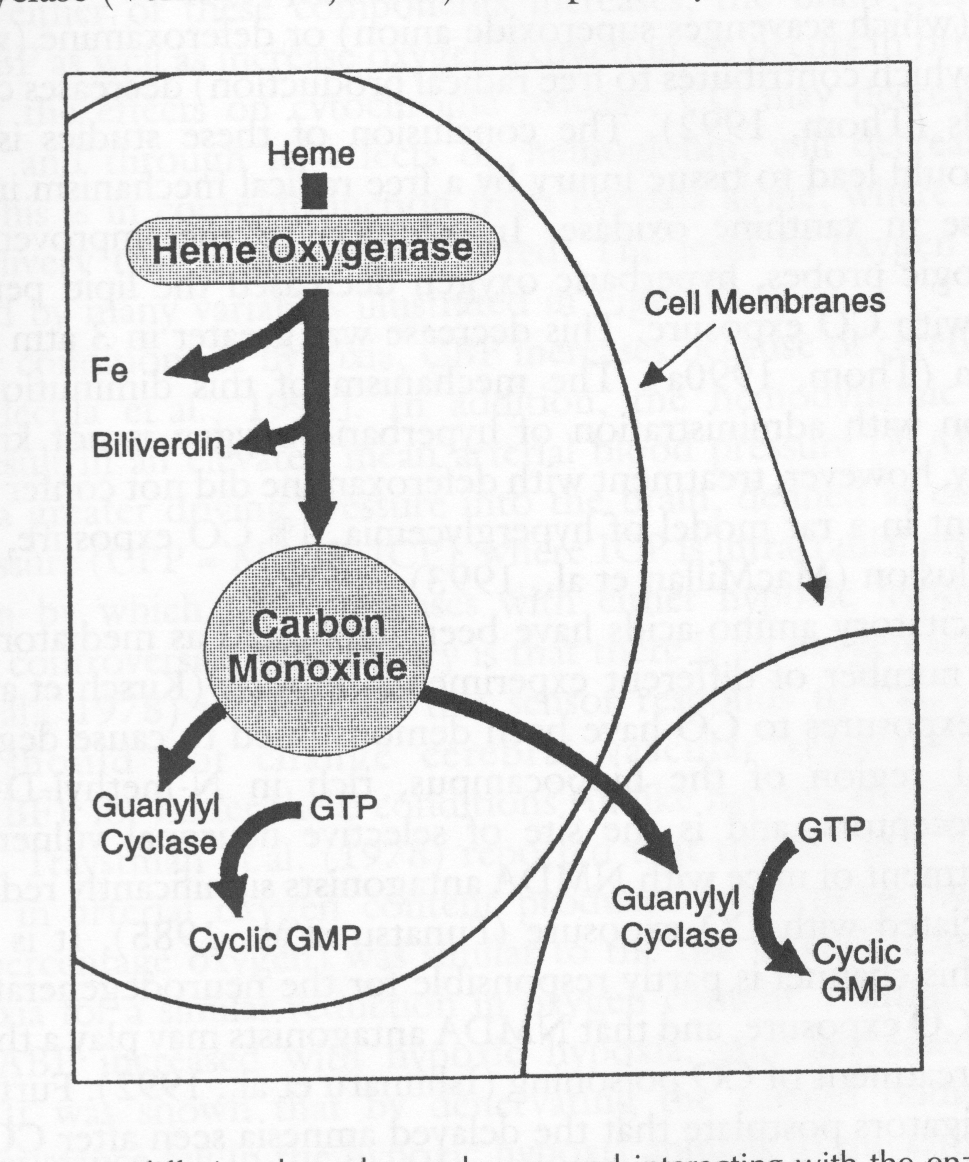
(via modulation of nerve action firing potentials by endogenous
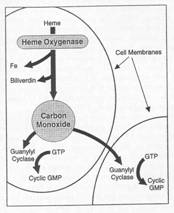
CO)
- High Altitude (consider local resident vs. Kansas tourist)
- Loud Noise (consider rock musician vs. librarian)
- High Heat (consider migrant farm worker vs. office worker)
- Bright Light (consider Inuit vs. coal miner)
- Pollen & Dander (consider child raised on farm vs. suburban home)
- ETS (consider smoker vs. non-smoker vs. ex-smoker)
- Trauma (consider tolerance of deployed soldier in war vs. retired)
- Temporary Multi-Sensory Sensitivity is associated with some transient
conditions (migraine and PMS again) but may persist
for years after untreated chronic carbon monoxide poisoning
|
|
7
|
|
|
8
|
- Outside of allergy and addiction research,
few human or animal studies are designed to assess their
subjects’ their degree of sensitization or habituation
- Human exposure studies considered by those establishing Occupational
Exposure Limits (TLVs) do not usually include retired and thus
potentially sensitized workers, but instead focus on tolerances of those
still working, who are most likely
to have the highest tolerances.
- Most animal exposure use identically raised animals with no prior
exposure experience which are then exposed to high levels according to a
frequent dosing schedule. This
is an excellent design to induce habituation, but animal studies are
rarely designed to also assess sensitization by keeping a cohort alive
longer through a long withdrawal period followed by re-exposure at a
much lower level.
|
|
9
|
|
|
10
|
- Poe changed from having a high tolerance for alcohol and
partying in his college years to low tolerance later in life:
- “My sensitive temperament could not stand an excitement
which was an everyday matter to my companions. ...
For some days after each excess I was invariably confined to bed.” EAP, letter
to Dr. Joseph Snodgrass, 8/1/1841
- Poe became hypersensitive not just to alcohol but to all types of
sensory stimuli (aka, Multi-Sensory Sensitivity):
- ““True!—nervous—very, very dreadfully nervous I had been and am; but why
will you say that I am mad? The disease had sharpened my senses—not
destroyed, not dulled them. … Have I not told you that what you mistake
for madness is but overacuteness of the senses?” EAP, The Tell Tale Heart, 1843
|
|
11
|
- “[Roderick Usher] suffered much
from a morbid acuteness of the senses:
- insipid food was alone endurable;
- he could wear only garments of certain texture;
- the odors of all flowers were oppressive;
- his eyes were tortured by even a faint light; and
- there were but peculiar sounds, and these from stringed instruments,
which did not inspire him with horror”
|
|
12
|
- Paracelsus’ Dose Response paradigm fails to account for
exposure history and the potential for both:
- a) asymptomatic habituation to high levels of exposure from chronic or
frequently repeated exposures; and
- b) hypersymptomatic sensitization to very low levels of exposure
following extended withdrawal from such habituation
- Individual dose response curves shift and change shape over time
depending on both recent and long-term exposure history.
- Animal and human studies that do not control for their subjects’ prior
exposure history may be undermined by these differences.
- Occupational and public exposure limits based on the experience of
highly exposed (habituated) populations are not protective of
de-habituated and sensitized populations
|
|
13
|
- Any animal may have a positive, negative or neutral non-response to any
given dose of any toxin at any time depending on the habituating vs.
sensitizing nature of the magnitude, frequency, duration and route of
all their prior exposures
- These parameters are studied in exposure assessment models but not
integrated into exposure standards based on dose response models that
focus on time weighted averages or total cumulative doses.
- Toxicological studies need to assess different exposure patterns: naïve
(no prior exposure), habituated (aka addiction), and sensitized (post
addiction).
|
|
14
|
- Poe was right: sensitization is not madness!
- You can’t party like you used to because
you no longer party as frequently as you used to,
which has caused you to lose your tolerance
for all the sensory stressors involved.
- Good News! You may be able to
party hard again
but only if you resume partying hard again on a regular basis…
- OR
- You could start smoking regularly, which will greatly increase your CO
level and thus also your tolerance for the much lower levels of CO
produced endogenously by HO-1, the universal stress enzyme, in response
to all kinds of sensory stressors.
|
|
15
|
- Given what you now know about the role of CO in sensitization, what
results would you expect from a study of:
- Dark Adaptation of the Eye
[and subsequent light sensitivity]
during Carbon Monoxide Exposure in Smokers and Nonsmokers
(von Restorff W and Hebisch S, Aviation, Space, and
Environmental Medicine, 1988;59(10):928-931)
- After exposing smokers and non-smokers to 5000 ppm CO for
5 minutes, the dark adaptation time increased 16% in both groups,
but the subsequent light sensitivity of their dark adapted eyes was much
more significantly reduced among the smokers (36 to 40%) than the
non-smokers (7 to 17%).
- This shows that
a) CO exposure impairs habituation time, even in smokers, and
b) Smokers are less sensitive to light when exposed to more CO.
|
|
16
|
- Inspired by MCS Symposium at American Chemical Society in 1998
- 2000: Reproducibility of the University of Toronto self-administered
questionnaire used to assess environmental sensitivity.
Am J Epidemiol. 151(12):1216-22.
- 2001: MCS: discriminant validity of case definitions.
Arch Environ Health. 56(5):406-12.
- 2004: Case-control study of genotypes in multiple chemical sensitivity:
CYP2D6, NAT1, NAT2, PON1, PON2 and MTHFR.
Int J Epidemiol. 33(5):971-8.
- 2004: Case-control study of multiple chemical sensitivity, comparing
haematology, biochemistry, vitamins and serum volatile organic compound
measures.
Occup Med (Lond). 54(6):408-18.
|
|
17
|
- Results from larger studies with more subjects are more significant
than results from smaller studies (all other factors being
equal).
Beware of small studies claiming great significance !
- Studies with control groups are better than ones without !
- The P-value specifies the probability of obtaining a result as or more
or extreme than the result observed due to chance alone,
so small P-values (less than or <.05=5%) are good, but
P<.01 is better !
- The 95% confidence interval (CI) specifies a range for the (unknown)
true result that is compatible with the (known) observed
result.
It means that if a study could be repeated 100 times,
the true result would fall within the confidence interval 95% of
the time.
- An Odds Ratio (OR) is the odds of a having particular outcome or disease
given a particular exposure or other factor (such as a genetic
abnormality) compared to the odds of having the same outcome without the
exposure.
An OR>1.5 is usually considered significant, but >2 is very
significant
(it means the odds in the exposed are TWICE those of the
unexposed)
|

 Notes
Notes